Why phishing is dangerous
Last reviewed by Phish Takedown
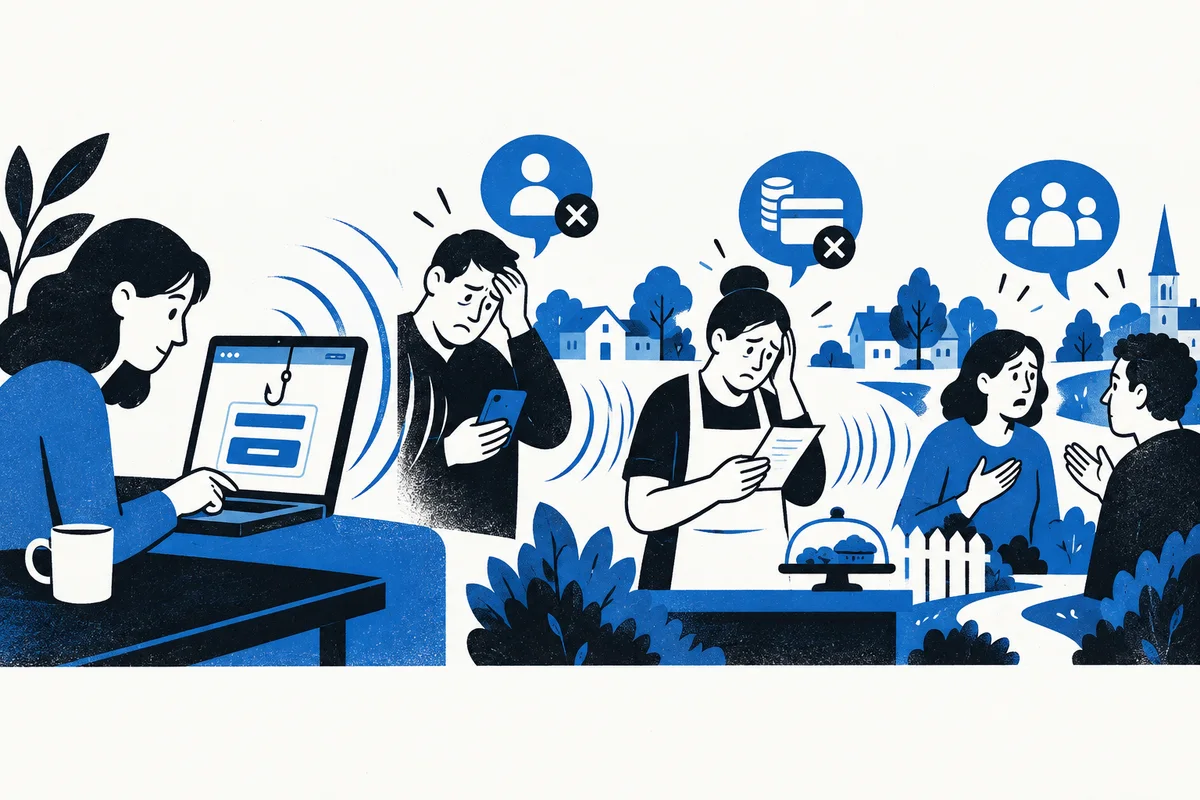
Phishing works against people rather than software. It reaches somebody at a busy, worrying, or hopeful moment and gives them a believable reason to act. That makes it a problem for anyone who uses email, messaging apps, online banking, social media, or workplace accounts.
The first thing stolen may be small. The consequences often are not.
An email password can open the door to password resets for shopping, social media, cloud storage, and financial services. A reused password gives a scammer more places to try. Access to a work account may expose internal conversations or files that make the next scam more convincing.
A scammer can also change recovery details, add a forwarding rule, or create a new login method. The owner may still be able to use the account and not realise that somebody else is reading it.
Fake payment pages collect card details. Bank impersonation messages persuade people to approve transfers. Crypto phishing pages may ask for a recovery phrase or present a wallet approval that gives away control of an asset.
These payments can be difficult or impossible to reverse. The victim then faces a second risk from people claiming they can recover the money for an upfront fee. Phish Takedown removes malicious sites, but we cannot retrieve stolen funds or accounts.
A compromised account gives a scammer an identity with history. Messages sent from a real colleague, friend, moderator, or community member are more likely to be believed than messages from a new account.
In a workplace, one stolen mailbox can be used to change invoice details or imitate a senior employee. In an online community, the account may post the same fake giveaway or support link to hundreds of people. The harm spreads because the account was trusted before it was compromised.
People lose time securing accounts, replacing cards, warning contacts, and checking devices. Organisations have to investigate, reset access, answer customers, and repair damaged trust. A convincing fake page can also put the name of an innocent company in front of thousands of potential victims.
That is why reporting matters even if you spotted the scam before entering anything. A report can help a host remove the site and help browsers or security services warn later visitors.
Use a different password for every account and turn on a strong second sign-in method where it is available. Reach services through their official apps or addresses instead of links in unexpected messages. Pause when a message creates urgency or asks for information that does not fit the task.
The practical steps are covered in how to protect yourself from phishing. If you already interacted with a suspicious page, use our phishing response guide first.
You can report a phishing website here. Send the address and tell us where you found it; there is no need to investigate it yourself.